
How To
Keeping your inventory accurate
An inventory is only useful while it tells the truth, and the truth drifts: books sell, get refiled in a hurry, ride along to a show and come home in a different box. A full re-inventory used to be the cure, and it used to cost a weekend. With labeled books it is a box at a time, whenever a box is handy.
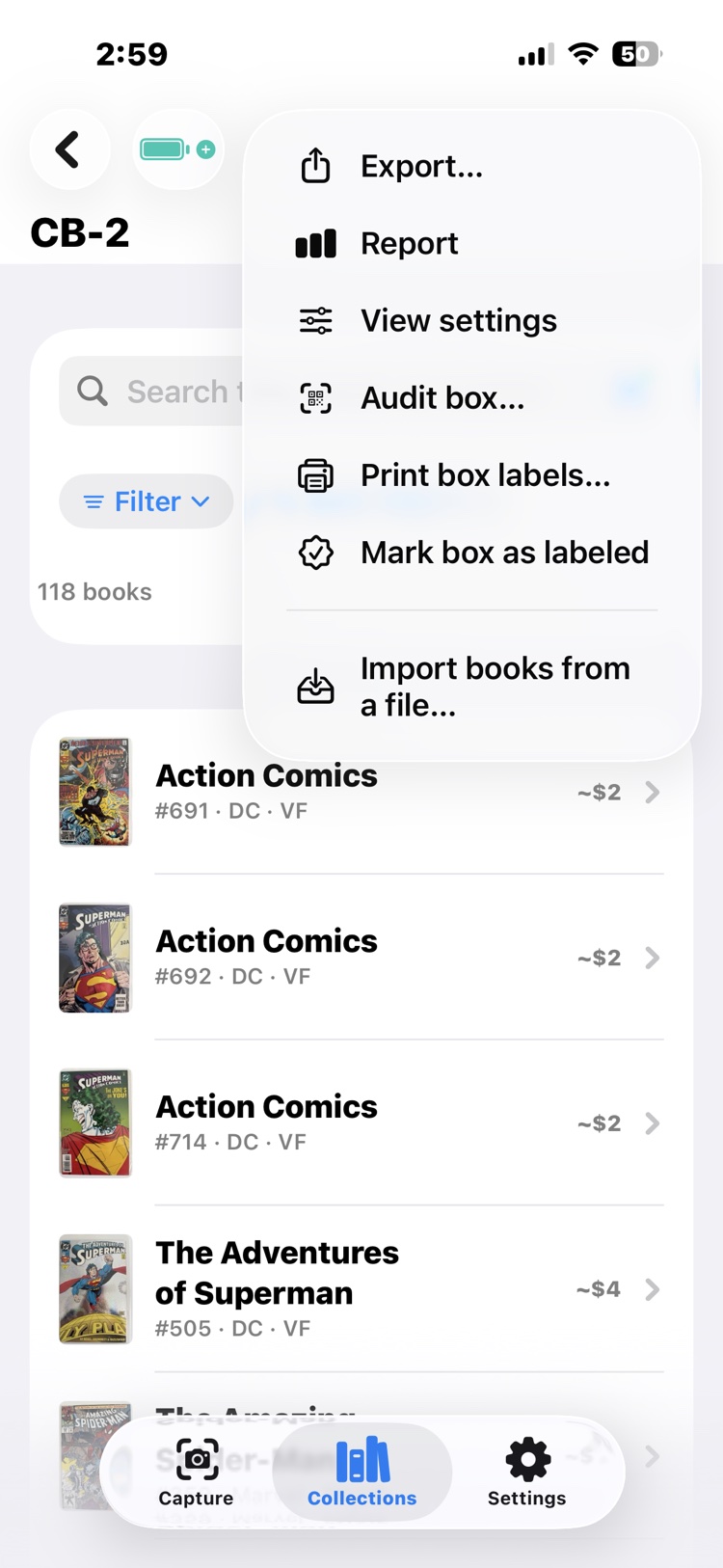
Audit Box
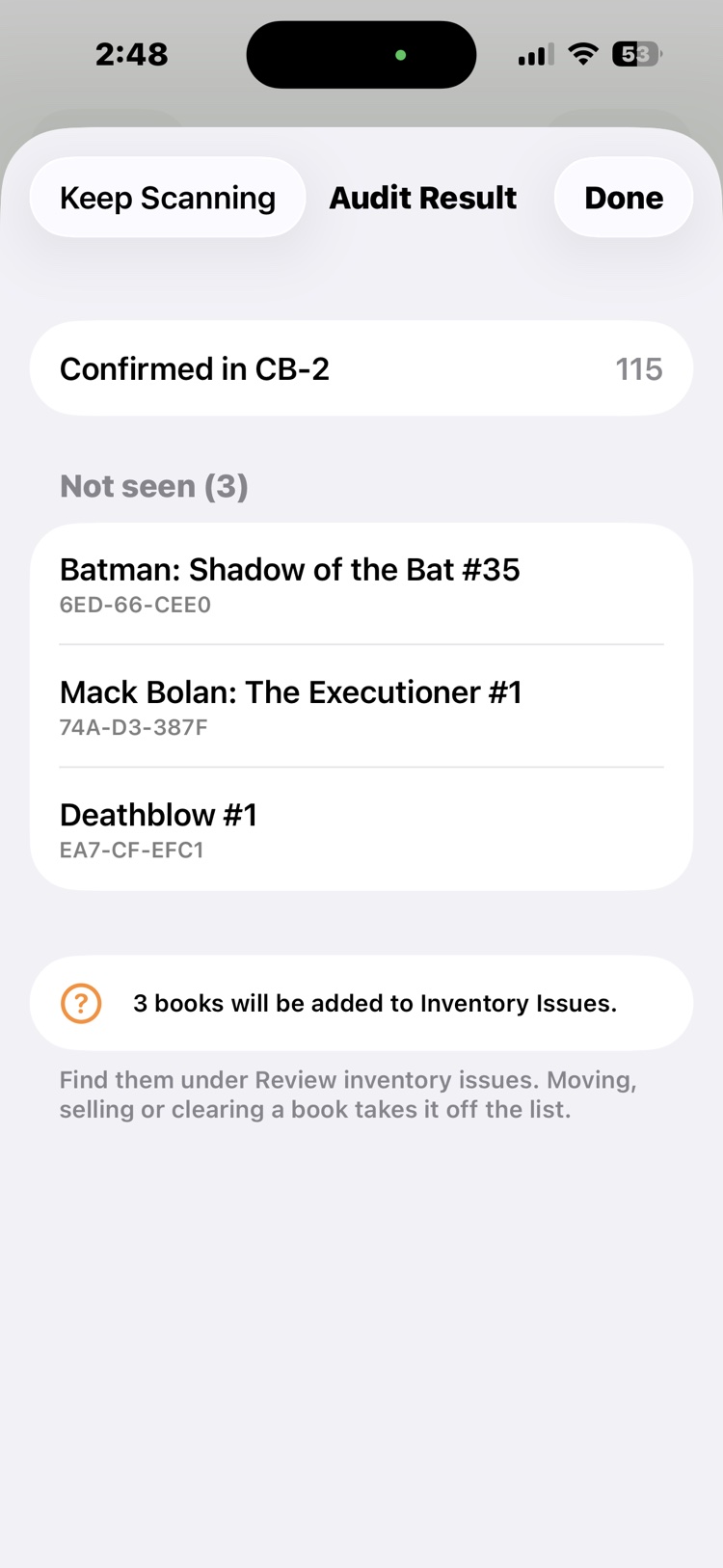
Open a box and run Audit Box: scan the labels down the box and the app reconciles what it sees against what the inventory says should be there, live as you go. Books confirmed present check off. A book that belongs in another box is flagged the moment its label reads. When you finish, whatever never got scanned is named too: the books that moved, sold, or went missing. Label scans are local and free, so an audit costs nothing but the minutes it takes.
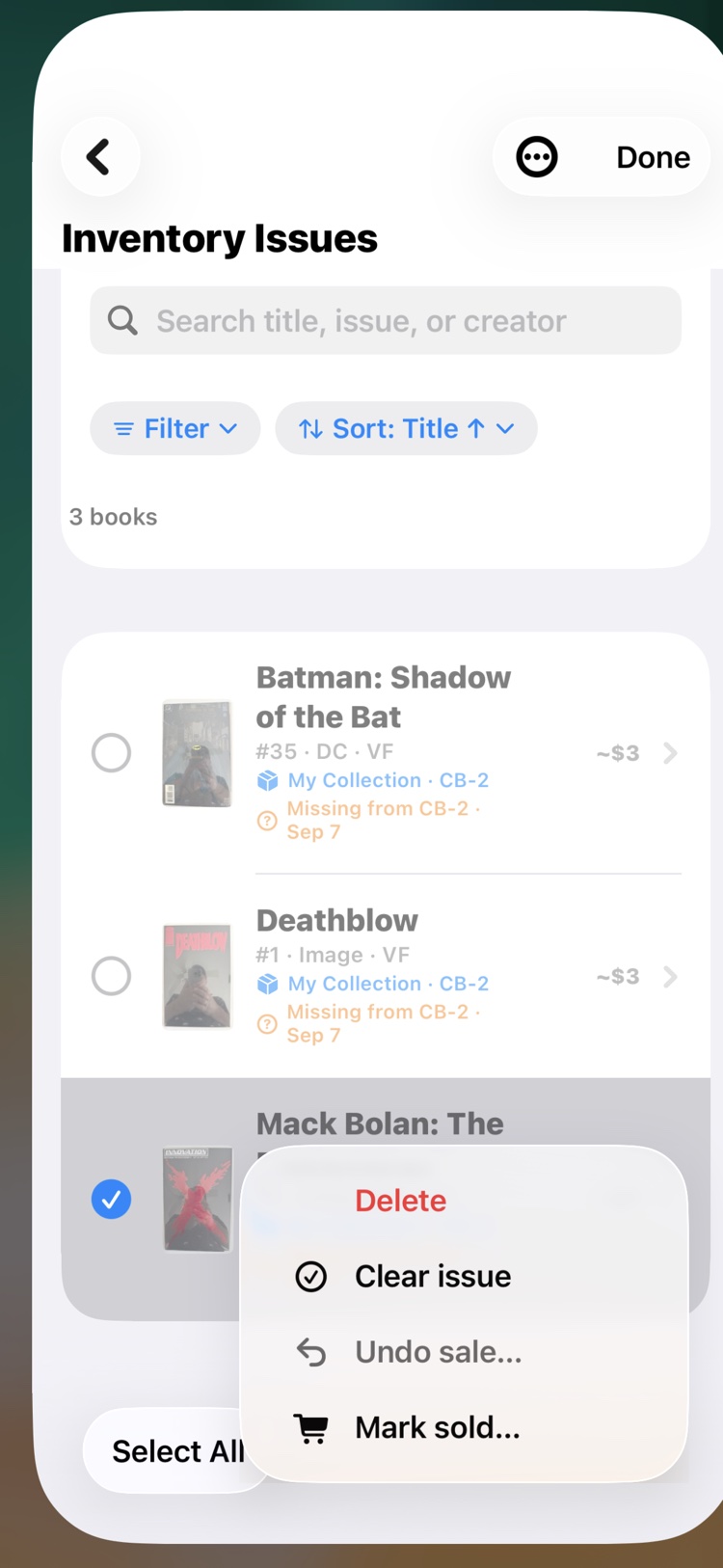
Review Inventory Issues
Nothing depends on your memory of the scan. The app collects every discrepancy into Review Inventory Issues, a persistent list you work through when you have a minute. A misfiled book gets moved where it belongs, or kept where it is with the record updated to match. A missing book you classify: it sold, or it walked away, and those mean different things to your records. The list is also smart about closing itself: a book flagged missing from one box that turns up in a later box's audit resolves on its own.
Moving books for real
When the fix is a move, the move is one step: select the books, by search or by scanning their barcodes, and change their box location in one action. That same move is how you re-box outside of audits too, so tidying a shelf never turns into record-keeping homework. The labels doing all this work come from the barcoding guide.
The sum of it: re-inventory stops being an event. Audit a box while the coffee brews, work the issues list from the couch, and the records stay something you can bet on.
See it in real life: this guide, told as a story: After the show follows the boxes home from a convention, audits them back to the truth, and works the issues list down to zero.