
How To
Ballpark values
A ballpark estimate puts an approximate value on a book, and approximate is the point. Most collections are a few books of high monetary value and a lot of books whose value is more personal, and the ballpark's job is to tell you which are which without you pricing three hundred books by hand.
Bulk, or one book at a time
You can ballpark a single book from its record when one book is the question. But the feature earns its keep in bulk: price a whole stack or a whole box in one pass, which is also the thrifty way to do it, because estimates are charged by the batch rather than by the book: one credit prices ten books in a bulk run. Bulk for the sweep, individual for the follow-up, and nothing is spent until you say so. The credits guide has the rest of the arithmetic.
A fresh box, priced in one pass
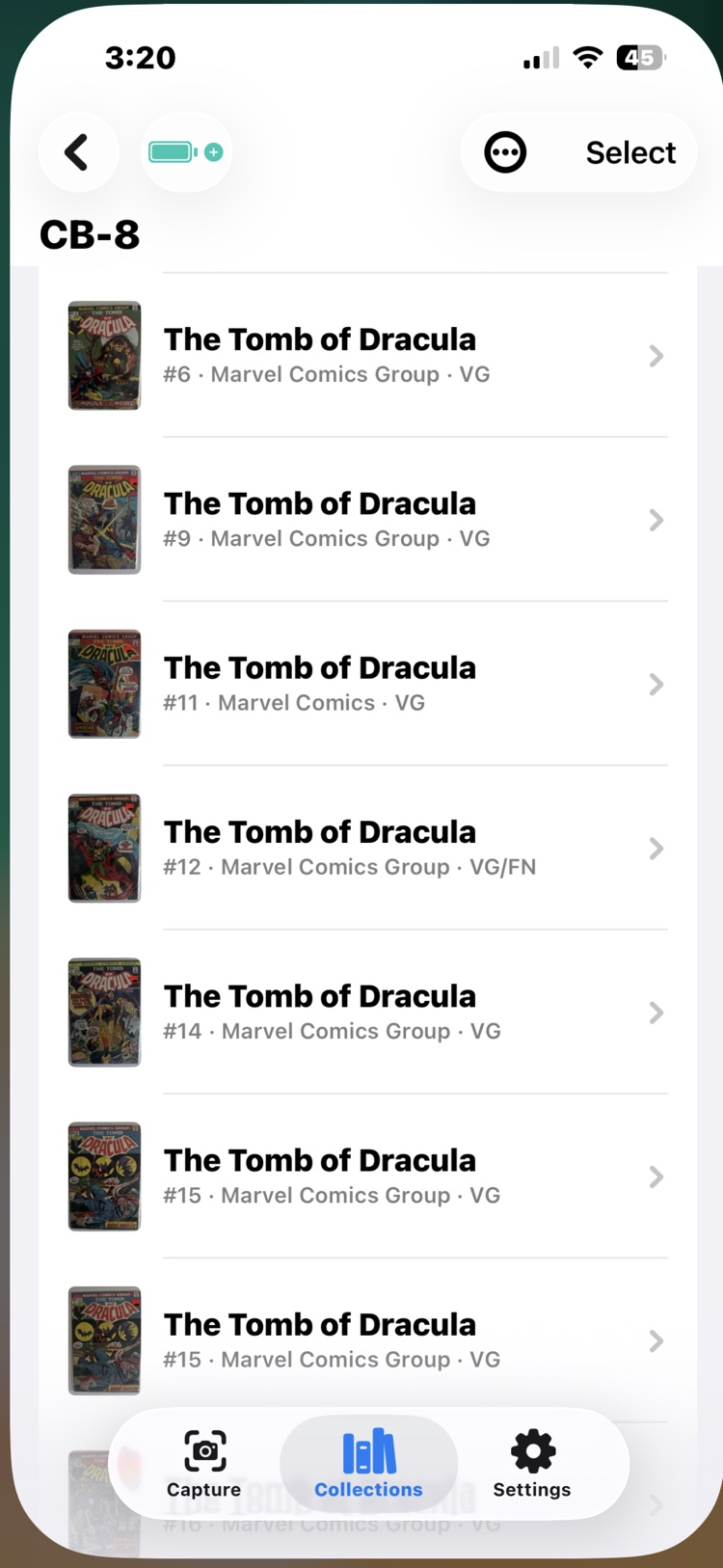
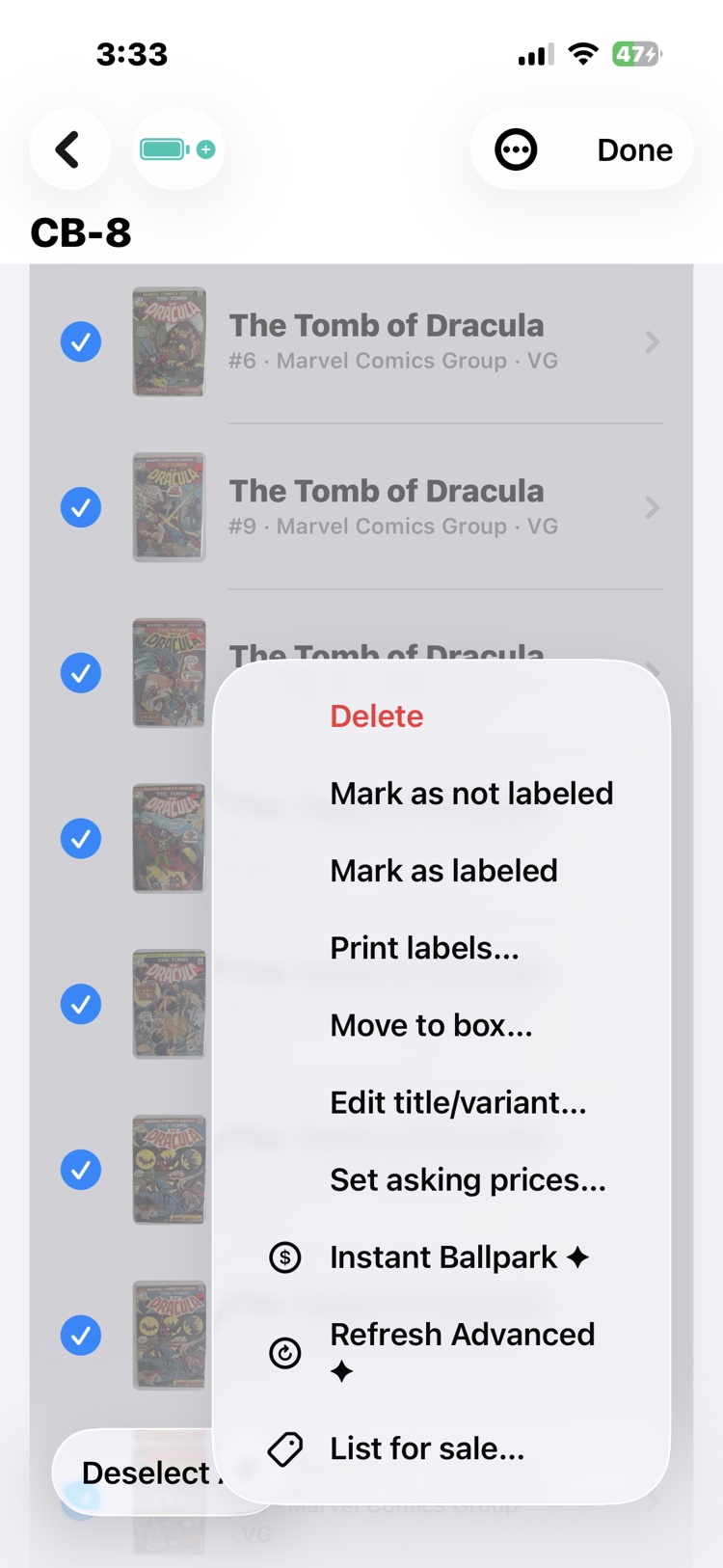
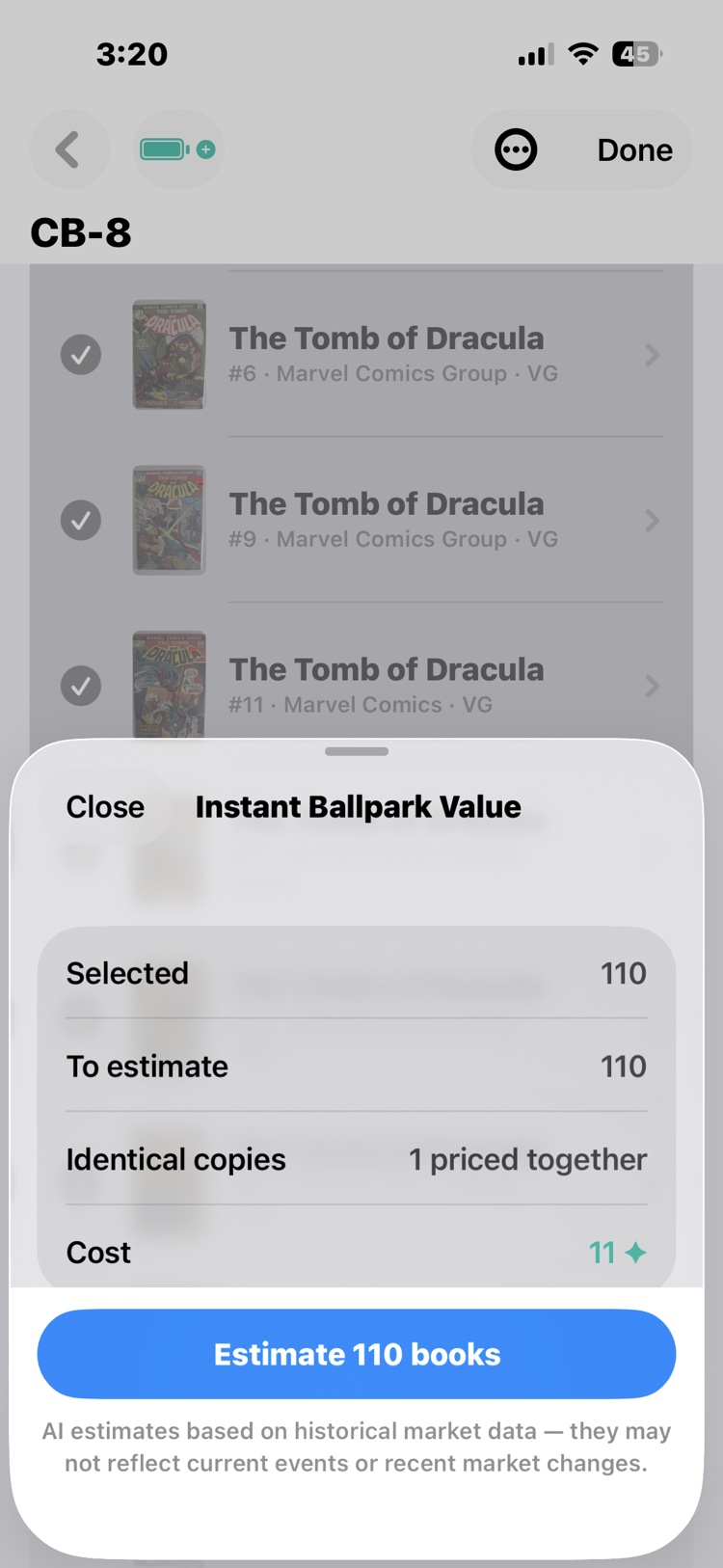
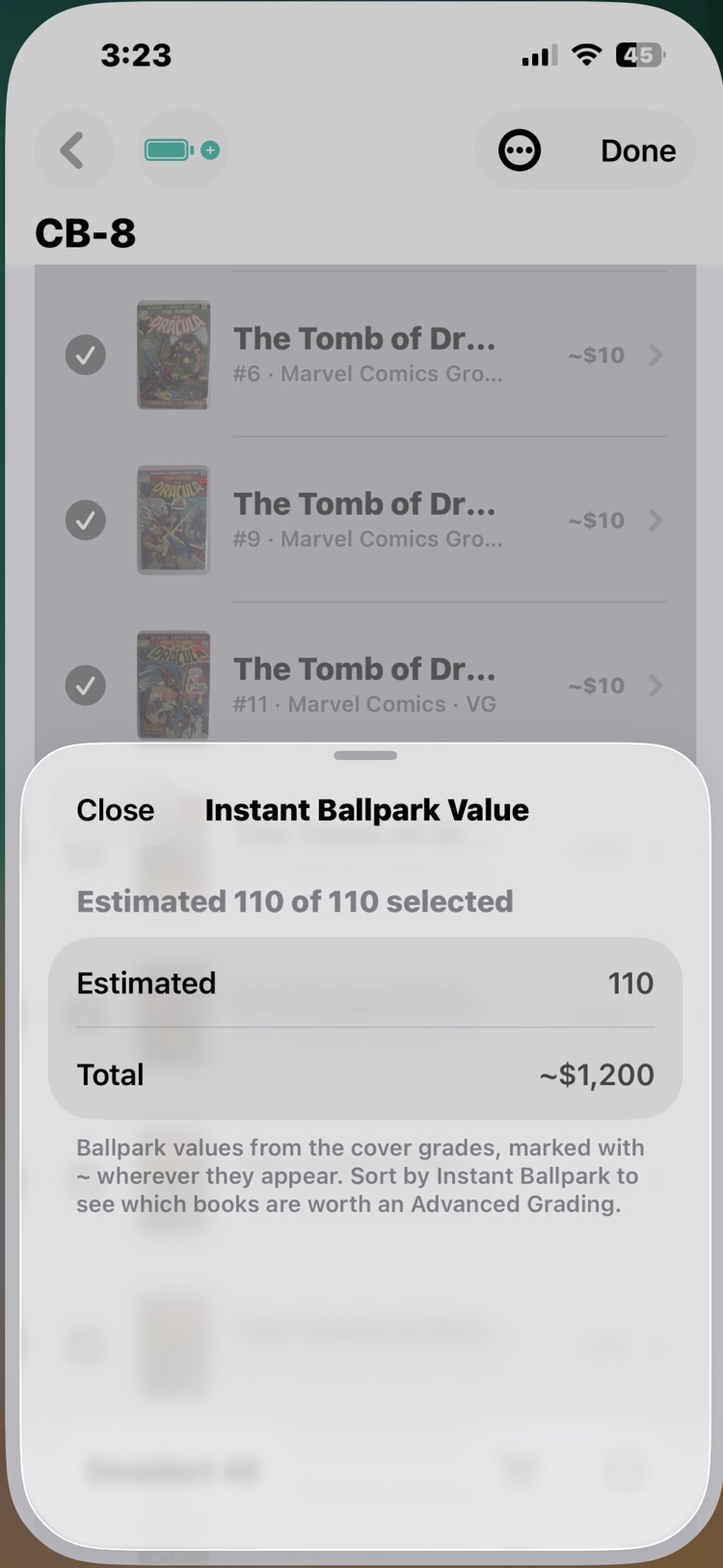
Here is the whole loop on a real box: CB-8, a Tomb of Dracula run, freshly scanned. Every book wears a grade from its cover scan and not one of them has a price. Select All, tap Instant Ballpark, and the sheet says exactly what it will do before anything is spent: 110 selected, 110 to estimate, one button.
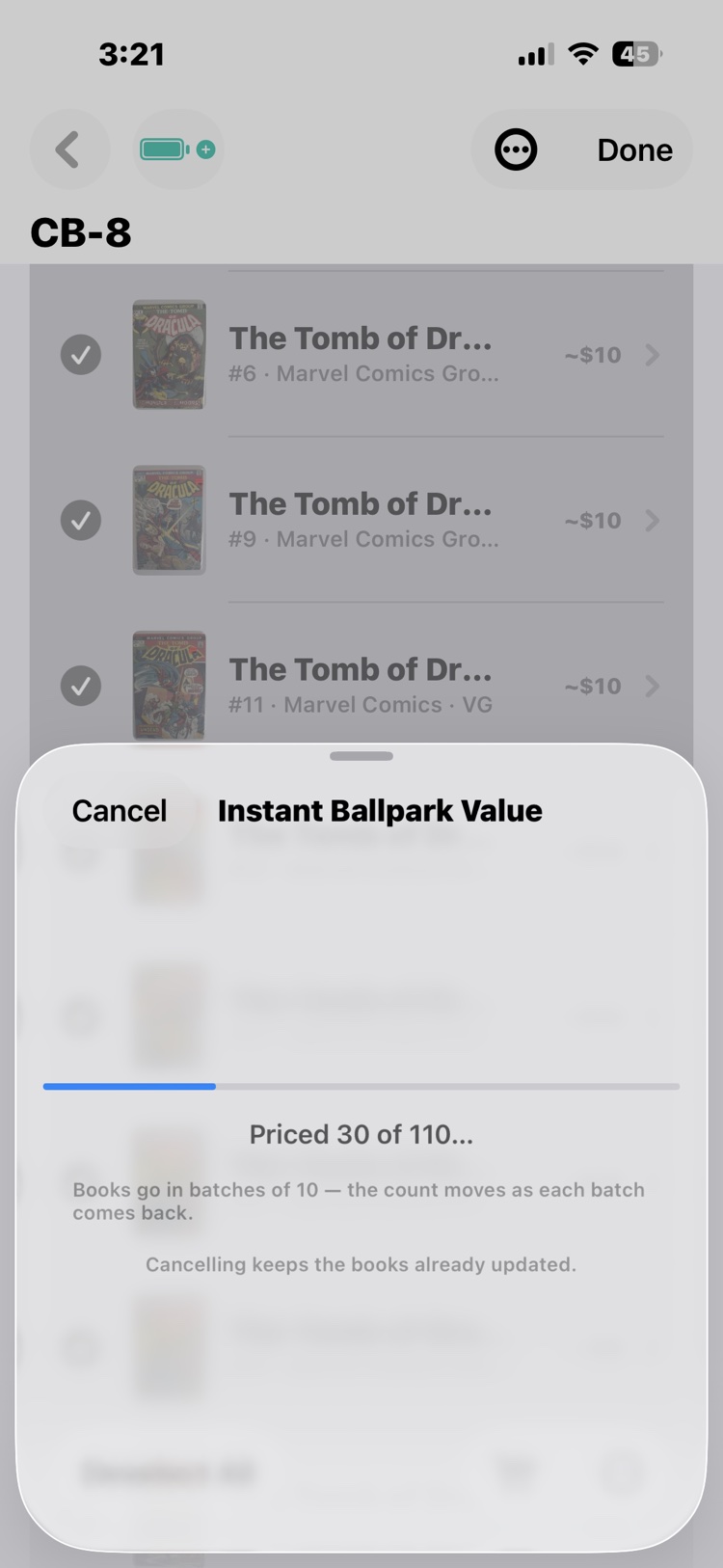
The run goes in batches of ten, and the count moves as each batch comes back. Cancelling keeps every book already updated, so a big run carries no all-or-nothing risk. Three minutes later (the clock in the corner is the receipt) the sheet totals the box at about $1,200, and every row wears its number.
A second, smarter look
A ballpark run is more than a price lookup. It hands your books to an advanced AI model that takes a second look at each one, and that look can fix issues from the original image scan: a printing pinned down, a detail the first pass missed. Then it derives the ballpark price on top of that better identification. So a bulk run over a box does two jobs at once: your records come back a little sharper, and every book comes back wearing a number.
A freshly ballparked box is also the right moment for a desk pass: export an Admin review and make any final corrections on the big screen (a mis-read issue number, a printing, an asking price) before you print barcode labels. The labels print each book's title, issue, and grade right on the sticker, so a box whose records are corrected first gets labels that are right the first time. Scan, ballpark, desk pass, print: that order means you handle each book once.
Read the number honestly
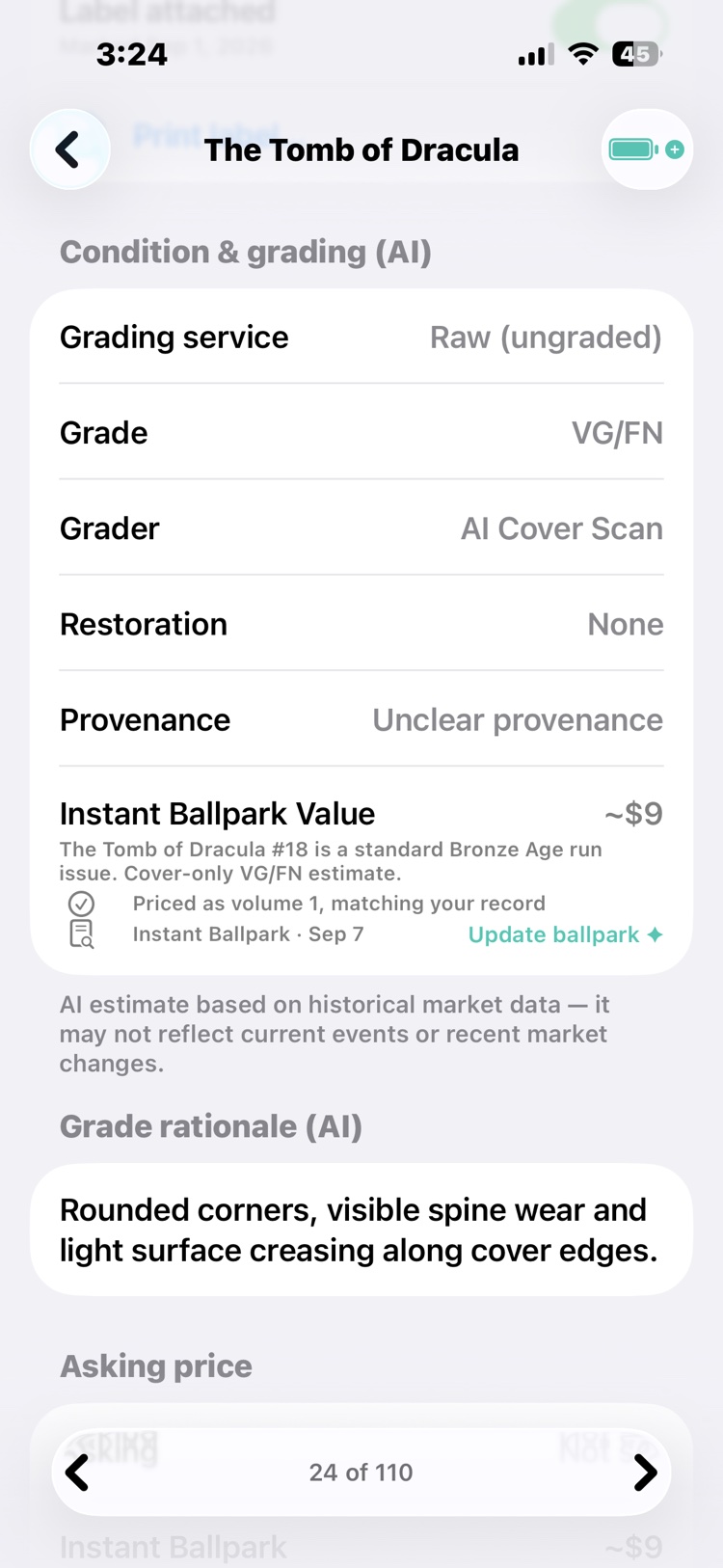
Estimates are based on historical market data and may not reflect current events, so every price carries its “last updated” date and a standing disclaimer. The panel behind each number also leads with the grading service: a raw book is priced raw, and a professionally graded book is noted and priced as the slab it is, because those are different markets. Treat them as ballparks: excellent at telling you which books seem valuable and deserve a closer look, not a substitute for your own judgment on an asking price. When a ballpark surprises you in the right direction, that is the cue for Advanced Grading: the full condition workup that turns “maybe something” into a number you can be confident in.
See it in real life: ballparks price a pile across the table in The other side of the table, back up an asking total in The stack and the offer, and the FAQ's pricing answer shows the estimate panel, date and disclaimer included.